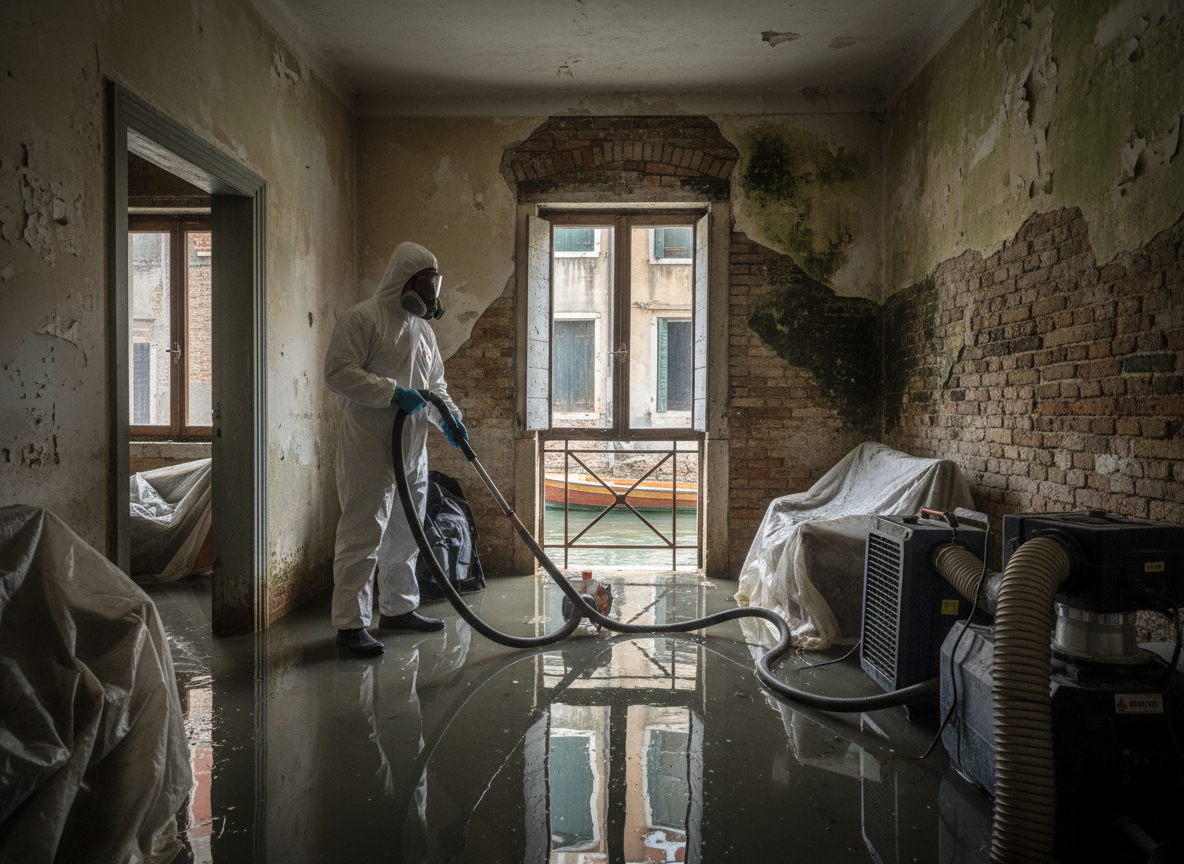
Venice sits in Los Angeles County with a mild Mediterranean climate that keeps temperatures moderate yet allows persistent ocean humidity to affect older wood-frame homes. Properties in the Canals and Abbot Kinney areas often feature original 1920s-1940s construction with limited crawlspace ventilation and proximity to tidal water, creating hidden moisture pockets behind plaster and under flooring. These conditions turn small leaks from aging pipes or winter rains into widespread growth that standard cleaning cannot resolve.
Remediation work here requires strict containment because many homes sit close together along narrow streets and walkways. We isolate affected rooms with plastic barriers and negative air machines to keep spores from drifting into adjacent living spaces or neighboring bungalows in Oakwood and Rose Avenue. After removal we focus on drying the structure with targeted airflow, then address the source such as poor grading near the Venice Canals or salt-air corrosion on metal flashing.
Homeowners in Marina del Rey and Culver City often call after noticing musty odors following the cooler months when indoor humidity rises. We inspect attics, under sinks, and around window frames where condensation collects on single-pane glass common in pre-1960s stock. Every job ends with a written report noting moisture readings so residents can verify the work before any finishing repairs begin.
Technician insight
In Venice, the thing that catches most people out with mold remediation near me is water wicking up from the Canals into older pier-and-beam foundations during high tides. Homeowners in the Canals neighborhood often miss this because the growth stays hidden under floorboards until it reaches interior walls.
Hidden Growth in Oakwood Bungalow
Problem: Musty odor appeared in an Oakwood home after several days of coastal fog. What we found: Mold behind baseboards fed by slow seepage from an old roof valley near the Venice Skatepark area. What we did: Contained two rooms, removed baseboards and drywall sections, treated framing, and improved attic venting. Outcome: Moisture readings dropped to safe levels and the homeowner avoided larger structural repairs.
How it works
- 1
Initial Assessment
We arrive at the Venice property and use moisture meters plus visual inspection to map all affected areas without disturbing surfaces.
- 2
Containment Setup
Plastic sheeting and negative air pressure isolate the work zone to protect nearby rooms and neighboring homes along Abbot Kinney Boulevard.
- 3
Removal and Cleaning
Damaged materials are removed, surfaces are treated with antimicrobial agents, and HEPA vacuuming captures remaining spores.
- 4
Drying and Verification
Dehumidifiers and air movers dry the structure, followed by post-remediation moisture checks before clearance.
Pricing
Cost depends on square footage affected, depth of growth into walls or subfloors, and access in older Venice homes; we provide upfront quotes after inspection.