2026-10-23 ·
How Marine Layer Fog Drives Mold Growth in Venice Homes
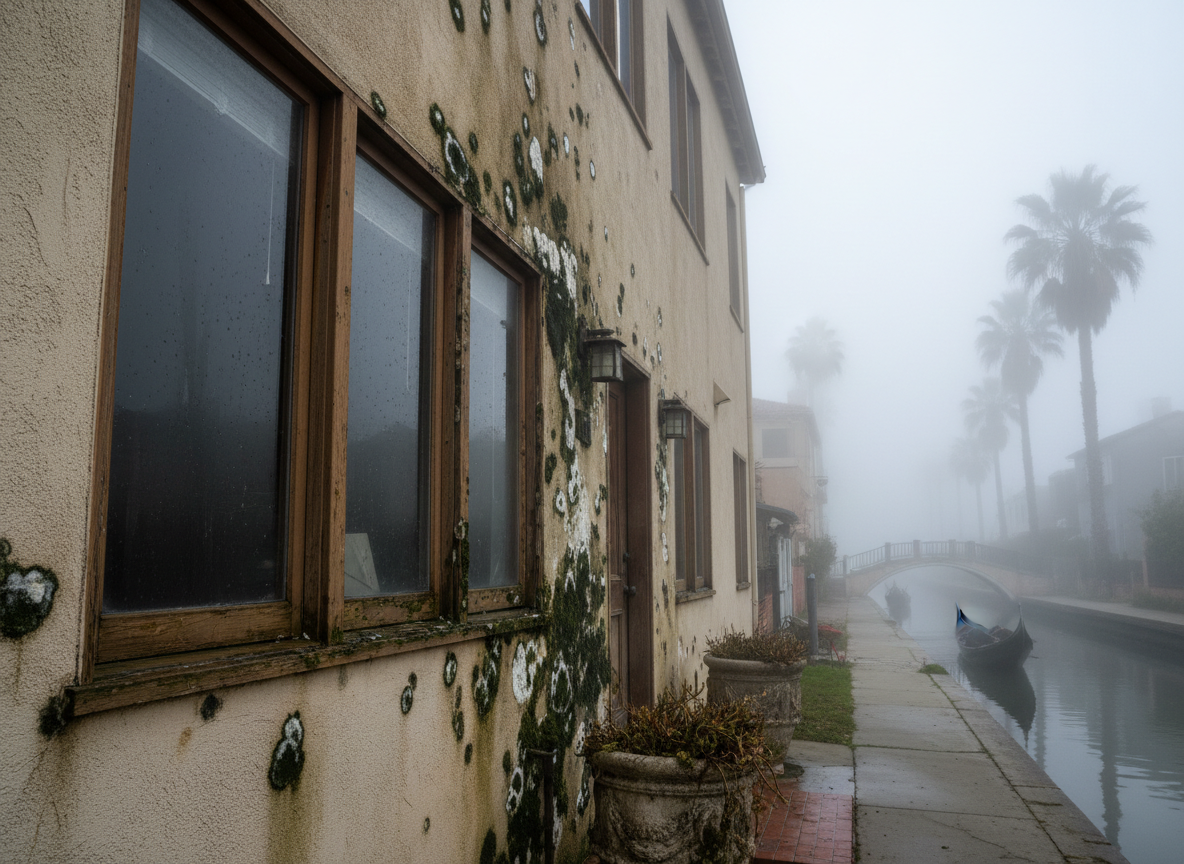
Marine layer fog in Venice drives indoor humidity above 60 percent for weeks at a time during peak months, allowing visible mold colonies to appear on drywall and framing within 24-48 hours when surfaces stay damp.
How Marine Layer Fog Forms and Reaches Homes
The Pacific marine layer typically rolls in overnight from May through August, blanketing Venice Beach, the Canals, and Abbot Kinney with cool, moist air that lingers until midday. This fog adds 15-25 percent relative humidity inside older bungalows common throughout Los Angeles County, especially those built before 1960 with single-pane windows and limited insulation. Homes near the Venice Canals and Rose Avenue sit lower and trap the moisture longer because the flat terrain and narrow streets limit airflow. Once outdoor humidity spikes, indoor surfaces cool below the dew point, causing condensation on walls and ceilings that feeds mold spores already present in the air.
Why Venice Housing Stock Reacts Strongly
Many residences in Oakwood, Milwood, and North Venice feature original plaster walls and crawl spaces that absorb moisture from repeated fog events. These 1920s-1950s structures lack modern vapor barriers, so water vapor migrates through foundations and settles in attics. The mild Mediterranean climate keeps temperatures moderate year-round, removing the drying effect of hot summers that other regions rely on. As a result, even small leaks from fog-driven condensation can sustain growth for months before homeowners notice musty odors near baseboards or in closets.
Neighborhood Differences in Fog Exposure
Areas west of Lincoln such as Venice Beach and the Canals District receive the heaviest marine layer because they sit closest to the shoreline and the Venice Skatepark open space. East of Lincoln neighborhoods like Windward Circle and East Venice see slightly less direct fog but still experience elevated humidity carried by afternoon breezes. Properties along Abbot Kinney Boulevard often have mixed-use buildings with shared walls that transfer moisture between units, increasing risk for adjacent homes. Residents in these zones report recurring issues in bathrooms and kitchens where exhaust fans cannot keep up with the constant moisture load.
Homeowners noticing black spots on window sills or soft spots in flooring should consider residential mold testing before conditions spread. For those managing rentals, When to Test for Mold in Venice Rental Units outlines timing that aligns with seasonal fog patterns.
Steps to Reduce Fog-Driven Moisture
- Run bathroom exhaust fans for 20 minutes after showers and install timer switches to ensure they continue after occupants leave.
- Place dehumidifiers set to 50 percent in crawl spaces and attics during May through September when marine layer activity peaks.
- Seal gaps around windows and doors with weatherstripping rated for coastal humidity to limit vapor entry.
- Inspect attics every 60 days for new discoloration on rafters, especially in homes within two blocks of the Venice Canals.
These measures slow growth but do not replace professional assessment when colonies exceed a few square feet.
When growth appears in multiple rooms or returns after cleaning, mold remediation near me provides targeted removal that addresses the moisture source. Additional reading on local pricing factors appears in What Affects Mold Remediation Costs in Venice California.